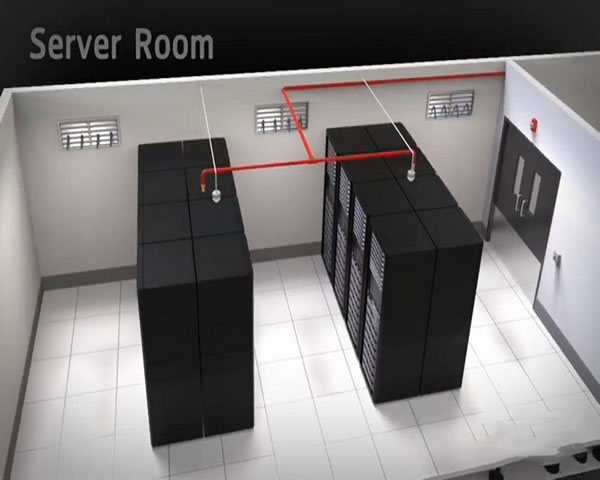
introduction: in overseas business and high-risk network environments, customized us high-defense servers have become the key to ensuring service availability. this article takes the "u.s. high defense server customization service process and delivery cycle guide under customized requirements" as the main line to sort out the standard process, time nodes and common acceleration methods from demand confirmation to final delivery, helping the team make executable project plans and reduce delivery risks.
needs assessment and solution confirmation
the first step is to conduct a comprehensive assessment of business traffic characteristics, attack surface, compliance and geolocation requirements. the assessment should include peak bandwidth, concurrent connections, historical attack data and compliance constraints. based on the assessment results, the supplier and the customer jointly confirm the hardware, network and protection strategies, and form a written requirements document to provide a basis for subsequent quotations and work orders.
hardware selection and redundancy design
at the hardware level, customized us high-defense servers need to consider cpu, memory, disk type and raid or mirroring strategy, as well as planning for power supply, cabinet and computer room redundancy. for key businesses, it is recommended to establish a dual-channel power supply, backup bandwidth and cross-machine room backup strategy to reduce the risk of single point failure, and clarify the hardware delivery and replacement process in the plan.
network link and bandwidth planning
the network part is the core of high-defense customization, including bandwidth peak reservation, link redundancy and bgp multi-line access design. it is necessary to preset parameters for ddos protection capacity, traffic cleaning thresholds and traffic forwarding solutions (such as black holes and traffic cleaning pools), and agree on slas with the computer room operator to ensure a clear traffic processing path in the event of an attack.
security strategy and high-defense configuration
high-defense server customization requires clear protection levels: network layer (ip layer), transport layer (tcp/udp) and application layer protection. protection mechanisms include traffic cleaning, behavior analysis, waf rules, rate limiting and connection tracking. customized services should provide policy templates, emergency response processes, and regular policy review mechanisms to ensure that protection strategies are synchronized with business development.
software deployment and operation and maintenance interface requirements
the software environment involves operating systems, runtimes, middleware and monitoring and alarm systems. the customization service needs to clearly define the image standard, configuration management method, api or control panel permissions, and operation and maintenance sop. providing automated deployment scripts, log collection, and alarm access helps shorten online time and improve subsequent operation and maintenance efficiency.
test acceptance and compliance inspection
three types of tests should be conducted before delivery: functional, performance and security tests: single-machine and cluster stress tests, attack and defense simulations, and compliance reviews (such as data ingress and egress, gdpr/local regulations and related requirements). the acceptance criteria need to be quantified, such as maximum load concurrency, cleaning peak and recovery time objective (rto), so that both parties can confirm in writing and serve as the basis for delivery.
lead time influencing factors and timetable
the delivery cycle is affected by many factors such as demand changes, hardware arrival, computer room approval and test complexity. the general process includes solution confirmation, procurement, rack installation, network joint debugging, testing and customer acceptance. by preparing requirement documents in advance, parallel purchasing and reserving hardware inventory, the delivery cycle can be effectively compressed and the risk of delay is reduced.
delivery process diagram and acceleration suggestions
the typical delivery process includes requirements review, contract signing, material procurement, deployment and debugging, and formal delivery. to speed up delivery, it is recommended to use standardized templates, preconfigured images, modular hardware and parallel testing. in addition, establishing a clear communication mechanism and project milestone management can enable rapid decision-making and ruling when problems arise to ensure delivery progress.
summary and suggestions
summary: the us high-defense server customization service process and delivery cycle guide for customized needs should be based on clear requirements documents, layered protection strategies and quantitative acceptance standards. it is recommended to invest in sufficient assessment and solution discussion at the early stage of the project, use parallel processes and standardized components to shorten delivery time, and stipulate changes and sla rules in the contract to reduce delivery and operation risks.

- Latest articles
- What Are The Advantages And Disadvantages Of Hong Kong And Taiwan Servers In Terms Of Latency And Regulations?
- How To Achieve Stable Operation Even If There Is A Cheap Thailand Vps Through Configuration Tailoring
- Why Do E-commerce Websites Prefer High-defense Servers In California, USA, To Protect Against Traffic Impact?
- Technical Guide: How Can Newbies Quickly Test And Go Online With Singapore Cn2 Direct Connection?
- Recommended Vps Cambodia Images And Automated Deployment Templates For Developers
- Zelda Scheduled Hong Kong Server And Local Server Delay Comparison And Selection Suggestions
- Japanese Cloud Server Download And Migration Practical Guide In Offline Installation Scenario
- Comparing The Specific Requirements For German Independent Servers On The Capabilities Of Operation And Maintenance Teams From Hosting To Self-management
- Network Diagnosis Method For Vietnam Server Cf Game Commentary In A Cross-border Battle Scenario
- Comparison Of Performance Of Japanese Cn2 Lines In Operator Interconnection In Different Regions
- Popular tags
-

How To Use Foreign American High-defense Cloud Servers To Build A Resilient Anti-attack Architecture
this article introduces how to use foreign high-defense cloud servers in the united states to build a resilient anti-attack architecture, covering architectural principles, traffic cleaning, elastic scaling, dns/cdn collaboration, monitoring alarms and compliance points. it is suitable for reference by network and operation and maintenance engineers. -
The U.S. Once Hacked Huawei’s Servers: A Technical Look At The Infiltration Methods And Defense Measures
Based on public reports, this article outlines the background and common penetration techniques behind the so-called “U.S. invasion of Huawei’s servers” incident, assesses the difficulties in detection, and offers defense and governance recommendations for enterprises and institutions. -